This post was written with the assistance of Claude Code (Anthropic), which also wrote the analysis script and generated the chart.
On March 21 I practiced ground handling at Lennuplats Kollane near Tallinn. Wind was moderate, gusty, from the south-southwest. I picked a tree in the distance, roughly into the wind, and tried to walk there with the wing overhead.
In the first part of the session, I used a forward position: facing away from the wing, as in normal flight. I could not see the wing and relied on brake pressure and harness loading. After 32 minutes, I had made no progress toward the tree. The GPS track shows I actually drifted further away.
Then I switched to reverse position, facing the wing. The wind was the same or slightly stronger. I reached the tree in about 25 minutes, walking backwards.
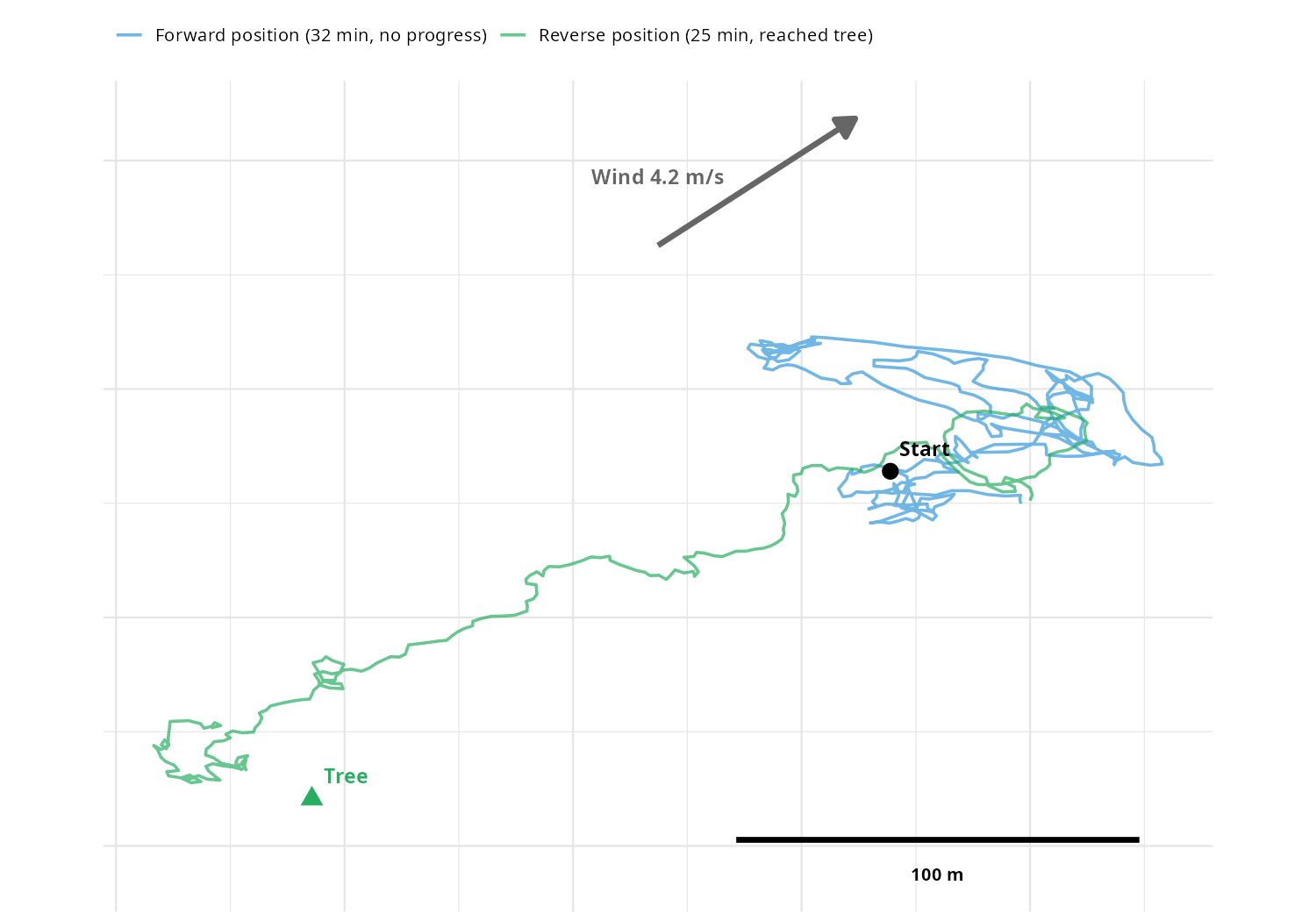
I recorded the track with OsmAnd and asked Claude Code to correlate GPS positions with 5-minute wind observations from Tallinn-Harku meteorological station, about 3 km from the field. The wind did not drop during the successful walk — if anything, it was higher. The tree turned out to be 214 meters away at a bearing of 222°, almost exactly into the wind. Harku station reported an average of 4.2 m/s during the reverse walk vs 4.1 m/s during the failed forward attempt, with gusts to 8.8 m/s throughout.
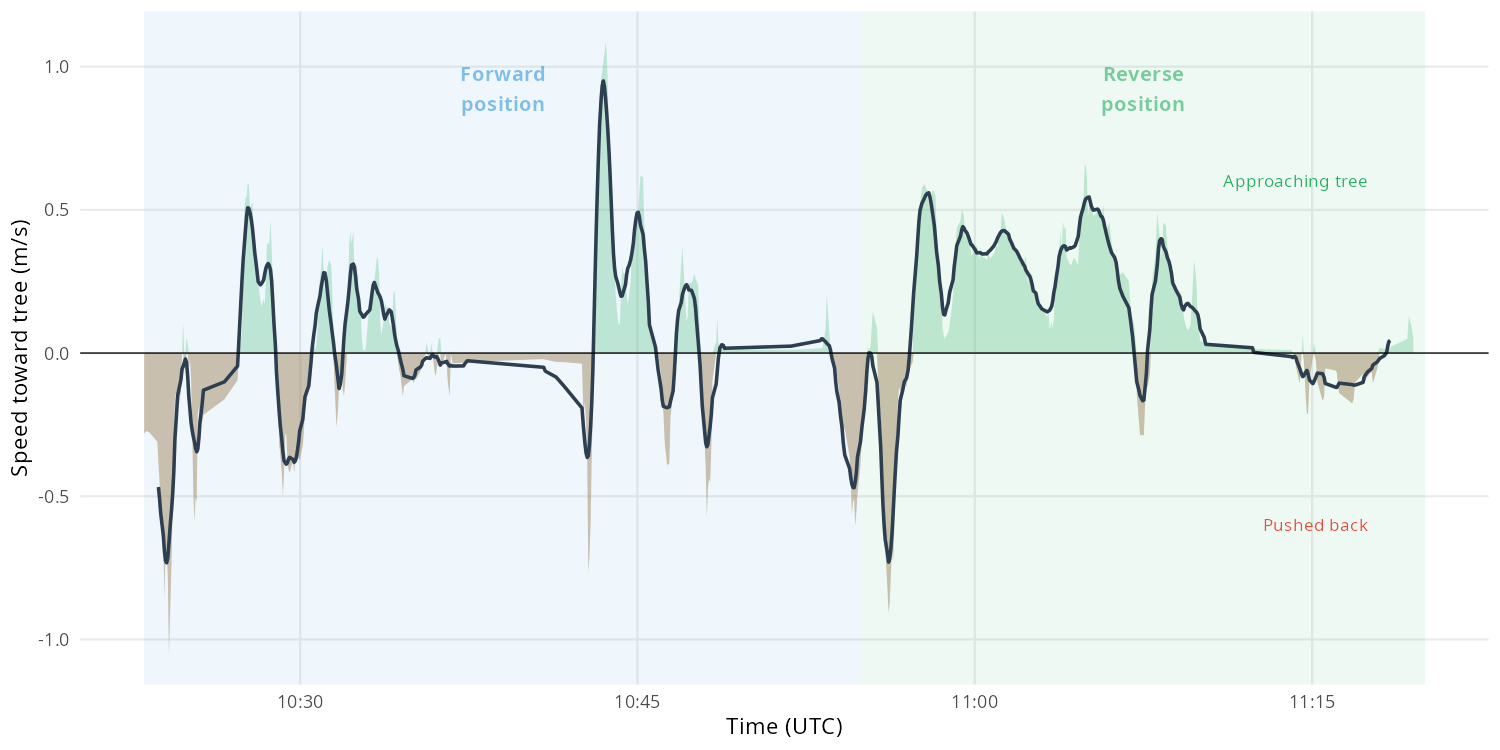
The difference is visual control. In reverse position, I see the wing and can correct earlier. In the forward position, the same information arrives through the harness and brakes, but apparently not fast enough for me to react to this level of wind. In lighter wind (~2 m/s, March 19 session), forward kiting worked fine.
This gap is relevant for flying. In a thermal, you don’t watch the wing — you feel it through brake pressure asymmetry and harness loading. At my current level, stripping away the visual channel means losing control in moderate wind.
A drill I plan to try next: kiting in reverse with eyes closed, narrating out loud what I feel — “right tip dropping, left riser heavy” — then opening eyes to verify. The idea is to speed up recognition of haptic signals until they are reliable enough to be recognized without visual confirmation.
Source code: gitlab.com/Matrunich/paragliding-analysis